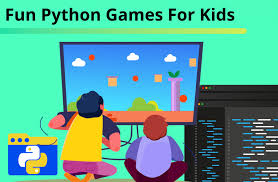
Python Programming For Kids
Python programming offers a fun and accessible way for kids in to learn coding. It’s known for its simple syntax. This makes it easier for young learners to grasp. Many local resources cater to children. They offer engaging courses and camps. These programs aim to build logic skills and creativity.
What is Python and Why is it Great for Kids?
Python is a computer language. Think of it like a secret code. We use it to tell computers what to do.
It’s used by big companies like Google and NASA. But it’s also super friendly for beginners. Especially for kids.
What makes Python programming for kids so good? It’s all about simplicity. The words you type look a lot like English.
This is different from other coding languages. They can look like a jumble of symbols. Python’s clean look helps kids focus on the ideas.
Not just on getting the syntax right.
Imagine building with LEGOs. Python is like having big, easy-to-connect bricks. You can build cool things quickly.
Your child can see their ideas come to life. This is very important for keeping them interested.
It helps kids learn to think in steps. Like following a recipe. Computers need exact steps.
Python teaches this logical thinking. This skill helps in school and in life. It’s not just about coding.
It’s about problem-solving.
In , many parents are looking for enriching activities. Activities that go beyond just sports or art. Coding is one such activity.
It prepares kids for a future where technology is everywhere.
We will explore how Python specifically shines for young learners in our city.
My First Coding Adventure: A Story
I remember helping my nephew, Leo, with his first coding class. He’s 9. We were in a small room at a community center in downtown .
The air smelled faintly of old books and crayons. He was nervous. His brow was furrowed.
He kept saying, “I don’t get it.”
The instructor was showing them how to make a simple game. Using Python. Leo’s eyes glazed over a bit.
He looked ready to quit. I sat beside him. I told him about my own first time trying to code.
It felt like learning a foreign language. I told him my fingers felt clumsy. And my brain felt slow.
We looked at the screen together. The code for a guessing game. I pointed out the words.
Like “guess” and “number.” I said, “See? It’s like asking a question.” Then we typed one line together. It asked the computer to say “Hello!” Leo’s face lit up.
Just that one little success. It changed everything. He leaned in.
He started typing more. He made the computer say his name. Then his dog’s name.
It was a small start. But his confidence soared. That little spark in a classroom was powerful.
Python Basics for Young Coders
What is a Variable?
Think of a variable like a box. You can put things inside it. Like a number or a word.
You give the box a name. Then you can use the name to find what’s inside. Example: `my_age = 9`.
Here, `my_age` is the box name.
What is a Print Statement?
This tells the computer to show something. You want it to display words or numbers. You use `print()`.
Example: `print(“Hello, Leo!”)` will show “Hello, Leo!” on the screen.
What is a Loop?
A loop tells the computer to do something over and over. It saves you from typing the same thing many times. Example: `for i in range(3): print(“Hi!”)` will print “Hi!” three times.
Finding Python Coding Classes in
So, where can your child actually learn Python programming for kids in ? The good news is, our city has many options. These range from after-school clubs to summer camps.
They are designed with young learners in mind.
Many local libraries offer free introductory coding sessions. Check the Public Library website. They often have programs for different age groups.
These are a great way to try coding without a big commitment. It’s a low-pressure environment. Kids can explore and see if they like it.
There are also specialized coding schools. These schools focus entirely on teaching kids technology skills. They might offer weekend workshops.
Or they might have full-day camps during school breaks. Some popular names you might find in include:
- CodeMinds Academy ( Campus)
- TechTots
- Future Coders of
These places often have instructors who are great with kids. They know how to make learning fun and engaging. They use games and projects.
This helps children understand complex ideas.
School-based clubs are also becoming more common. Many schools have an after-school computer club. Or a robotics club.
These often use Python as their primary language. Talk to your child’s school. See what opportunities are available.
When choosing a program, look for a few things. Does the curriculum focus on project-based learning? This means kids build actual things.
Like games or simple apps. Does the age range match your child? Are the instructors experienced with children?
The goal is to find a place where your child feels supported. A place where they can ask questions. And where they can celebrate their successes.
What Kids Can Build with Python
Simple Games: Think guessing games, rock-paper-scissors, or even text-based adventures.
Interactive Stories: Kids can write stories where choices change the ending.
Drawing and Art: Using libraries like Turtle, they can create colorful drawings and patterns.
Basic Tools: Like a simple calculator or a program to tell jokes.
The Benefits of Early Coding Education in
Learning Python programming for kids offers benefits that go far beyond just knowing how to code. It shapes how children think and solve problems. In our busy environment, these skills are more important than ever.
One major benefit is improved critical thinking. Coding requires breaking down big problems. You have to find smaller, manageable steps.
This is a skill that helps in math, science, and even in planning a birthday party.
Creativity gets a big boost too. Coding is a form of digital creation. Kids can bring their imaginations to life.
They can design their own characters. They can build their own worlds. It’s like giving them a digital canvas and a set of powerful brushes.
Persistence is another key trait learned. Coding doesn’t always work the first time. Errors happen.
This is called debugging. Kids learn to patiently find and fix mistakes. This teaches them not to give up easily.
It builds resilience. It shows them that challenges can be overcome.
Collaboration is also learned. Many coding programs involve group projects. Kids learn to work together.
They share ideas. They help each other. This is vital for future success.
Especially in workplaces.
For families in , investing in coding education is investing in your child’s future. The job market is changing rapidly. Technology skills are in high demand.
Early exposure to coding can open doors later on. It can spark an interest in STEM fields.
It’s not just about becoming a software engineer. It’s about being a capable, adaptable individual. Ready for whatever the future holds.
Myth vs. Reality: Kids & Coding
Myth: Kids need to be super smart to code.
Reality: Coding teaches smart thinking. It builds logic and problem-solving skills. It’s for curious kids of all levels.
Myth: Coding is boring and just for boys.
Reality: Modern coding for kids is highly interactive. It involves games, art, and stories. It’s for all genders.
Diverse role models are important.
Myth: My child will just stare at a screen all day.
Reality: Good programs balance screen time with discussion and hands-on projects. It encourages active creation, not passive viewing.
Understanding Different Learning Styles for Python
Every child learns differently. Some kids pick up coding concepts quickly by reading. Others need to see it.
Many learn best by doing. When looking for Python programming for kids in , consider your child’s learning style.
Visual learners benefit from programs that use lots of diagrams. They like seeing code blocks. Or flowcharts.
They enjoy watching demos. Many online platforms offer video tutorials. These can be great.
Websites like Code.org have visual drag-and-drop tools. These introduce concepts before moving to text-based coding.
Auditory learners might do well in group classes. They can listen to instructors explain concepts. They can also discuss ideas with peers.
Podcasts about coding or educational videos with clear narration can help them.
Kinesthetic learners learn by doing. They need hands-on experience. They love typing code.
They want to experiment. They want to see what happens when they change something. Project-based learning is ideal for them.
Building a game from scratch is perfect. Or creating a simple animation.
For kids in , you’ll find a mix of approaches. Some coding centers offer small group instruction. This allows for personalized attention.
Others might have a project-based curriculum. Where the focus is on completing a finished product.
Some programs might use visual block coding first. Like Scratch. Then they transition to Python.
This helps kids build foundational understanding. It makes the move to text-based coding smoother. Think of it as learning letters before words.
It’s also important to remember that kids are often a mix of styles. They might prefer one style over others. But they can benefit from exposure to all.
The key is finding a program that offers variety. And that adapts to your child’s needs.
Don’t be afraid to ask potential coding schools about their teaching methods. How do they cater to different learners? This shows they care about individual student success.
Quick Guide: Python Vocabulary
Syntax: The rules of a programming language. Like grammar for computers.
Code: Instructions written in a programming language.
Program: A set of instructions for a computer to follow.
Bug: An error in the code.
Debugging: Finding and fixing errors in the code.
Function: A named block of code that does a specific task.
Library: A collection of pre-written code that you can use.
Real-World Applications of Python for Kids
It’s easy to think of coding as something abstract. Something that happens only on a computer screen. But Python is used in the real world.
In ways that might surprise you and your child. Showing these connections can make learning Python even more exciting.
Many of the apps and websites kids use every day rely on Python. YouTube uses Python extensively. Spotify, the music streaming service, also uses Python.
Even Instagram has Python in its backend. This shows that Python is a powerful tool. It’s used for big, important projects.
Beyond websites, Python is used in science and research. Scientists use it to analyze data. Think about weather patterns.
Or how animals behave. Python helps them understand complex information. It’s like giving them a magnifying glass for data.
Robotics is another exciting area. Many robots are programmed using Python. If your child is interested in building and controlling things, Python can be their language.
Imagine programming a robot to navigate a maze. Or to perform a simple task.
Video game development uses Python too. While more complex games might use other languages, Python is great for rapid prototyping. It’s also used in some game engines for scripting.
Kids can learn to build simple games. This can lead to an interest in larger game design.
Even in everyday technology, Python plays a role. Smart home devices might use Python. Automation scripts, which make computers do repetitive tasks automatically, are often written in Python.
This can help manage files or send emails without manual effort.
For families in , understanding these real-world uses is key. It helps children see the value in what they are learning. It shows them that coding is not just a hobby.
It’s a skill that can lead to many different career paths. And it can help solve real problems in the world around us.
Python vs. Other Languages for Kids
Python: Easy to read, similar to English. Great for beginners. Wide range of uses.
Scratch: Visual, block-based. Excellent for very young children to learn logic without typing.
JavaScript: Used for web development. Makes websites interactive. Can be a bit more complex for absolute beginners.
Blockly: Similar to Scratch. A visual programming editor.
Why Python Wins for Many: Its balance of power and simplicity makes it a top choice for transitioning from visual coding to text-based coding. It’s versatile.
Navigating the Digital Landscape Safely in
When kids start exploring the digital world through coding, safety is a top concern for parents. In , as everywhere, online safety is crucial. It’s important to talk to your child about being responsible online.
Many coding programs will guide children on how to use the internet safely. They teach them not to share personal information. Like their full name, address, or school.
They learn to be wary of strangers online. This is part of digital citizenship.
Most reputable coding classes and camps in have strict policies. They supervise children closely. They ensure a safe learning environment.
The instructors are trained to handle situations that might arise.
When your child is coding at home, consider these tips:
- Parental Controls: Use them on computers and internet routers.
- Open Communication: Encourage your child to talk to you about anything that makes them feel uncomfortable online.
- Limited Online Sharing: Teach them what is okay to share and what is not.
- Time Limits: Balance screen time with other activities.
It’s also wise to know what your child is working on. Ask them about their projects. Show interest.
This helps you understand their digital world. And it opens the door for discussions about online behavior.
Coding should be a positive and empowering experience. By being aware of online safety, you can ensure that it remains that way. Especially as your child dives deeper into Python programming for kids.
Tips for Parents in
Talk about it: Ask your child what they are coding. Show genuine interest.
Visit a class: If possible, visit a trial class or open house. See the environment.
Check reviews: Look for feedback from other parents in about coding programs.
Start small: Don’t feel pressured to sign up for an intensive program right away. Try a workshop first.
Focus on fun: The primary goal for young kids should be enjoyment and exploration.
What This Means for You and Your Child in
The world of coding might seem complex. But Python programming for kids is quite accessible. Especially here in .
It’s a fantastic way to equip your child with essential skills for the future.
It’s about more than just a technical skill. It’s about fostering a mindset. A mindset of curiosity.
Of problem-solving. And of creation. These are skills that will serve your child well, no matter what path they choose.
You might be wondering, “Is my child ready?” The answer is likely yes, if they are curious. If they like to build things or solve puzzles. Many programs are designed for absolute beginners.
They start with the very basics.
The key is to find the right fit for your child. Consider their age. Their interests.
And their learning style. What might work for one child might not work for another.
If your child shows an interest in computers, games, or how things work, explore coding. Even a few sessions can make a big difference. It can spark a lifelong passion.
Or it can simply give them a fun new way to think.
For families in , the opportunities are growing. Take advantage of them. Give your child the gift of a skill that is both fun and future-proof.
Quick Tips for Getting Started with Python
Ready to help your child take their first step into Python? Here are a few simple ideas to get you both started.
- Online Resources: Websites like Code.org, Khan Academy, and Hour of Code offer free, beginner-friendly coding lessons. Many use Python or introduce concepts that lead to Python.
- Free Software: You can download Python for free. Kids can start experimenting on your home computer.
- Books for Kids: Many libraries in have books on Python for children. These often use fun examples and stories.
- Local Workshops: Look for one-day workshops or intro sessions. These are great for a low-commitment trial.
- Encourage Experimentation: Let your child play with the code. It’s okay if they make mistakes. That’s how they learn.
When to Seek More Formal Training
Consistent Interest: If your child keeps asking to code and enjoys it.
Building Complex Projects: When they want to make more than simple games and need structured guidance.
Desire for a Social Experience: Coding with peers can be motivating.
Structured Learning: Some kids thrive with a clear curriculum and teacher-led instruction.
Frequently Asked Questions about Python for Kids in
Is Python really suitable for young children?
Yes, Python is very suitable for young children. Its simple, English-like syntax makes it easier to read and write than many other programming languages. This makes it a great first language for kids.
What age is best to start learning Python?
Children can start learning the concepts behind Python as young as 6 or 7, often with visual tools like Scratch. They can begin writing actual Python code around ages 8 to 10, depending on their reading and logic skills.
Do I need to be a programmer myself to help my child?
No, you don’t need to be a programmer. Many parents learn alongside their children. There are many resources available for beginners.
Focusing on support and encouragement is key.
How can I find Python classes for my child in specifically?
Search online for “kids coding classes ,” “Python camps for children ,” or “STEM programs for kids .” Also, check with local libraries, community centers, and schools for available programs.
What are the benefits of my child learning Python over other coding languages?
Python’s readability is a major advantage for beginners. It’s also incredibly versatile, used in web development, data science, AI, and more. This means skills learned are broadly applicable.
It’s a strong foundation for future tech learning.
Is coding for kids just about future jobs?
Not at all. While coding skills are valuable for future careers, the benefits for children are much broader. It develops critical thinking, problem-solving, creativity, logic, and persistence.
These are life skills that help in all areas.
Can my child learn Python online, or is an in-person class better?
Both online and in-person classes have benefits. Online courses offer flexibility and a wide range of options. In-person classes provide direct interaction with instructors and peers, which some children prefer.
It often depends on your child’s learning style and your family’s schedule.
Conclusion: Your Child’s Coding Journey in
Starting your child on the path of Python programming for kids is an exciting step. It’s an investment in their future. It’s also a wonderful way for them to explore their creativity.
And build valuable problem-solving skills. With so many resources in , you can find the perfect fit. Make it a fun adventure!

Related Posts

Tech Career Coaching Services Near Me
Project Management (Pmp) Prep Classes